Health Promotion and Social Behavioral Change (SBC)
Empowering communities, transforming health seeking behaviors, and shifting social norms across northern Cameroon.
Health Promotion and Social Behavioral Change (SBC)
Empowering communities, transforming health seeking behaviors, and shifting social norms across northern Cameroon.
The Strategic Need: Why Social and Behavior Change (SBC)?
Expanding primary health care services (Pillar 1) and building health worker capacity (Pillar 2) are essential, but clinical availability alone does not guarantee care utilisation.
In northern Cameroon, deep-seated cultural norms, gender dynamics, low health literacy, and systemic stigma often prevent families from seeking timely care. Pillar 4 bridges the gap between the health facility and the home. By moving beyond traditional "top-down" health education, our SBC framework uses participatory dialogue, multi-channel communication, and normative change to empower communities as active leaders of their own health.
Contextual Challenges in Health Promotion and Community Demand
Drawing directly from the operational realities in target districts across Adamawa, THRIVE addresses six core behavioral and social bottlenecks:
Delayed Care-Seeking
Cultural decision-making dynamics often require women to seek permission from household heads or mothers-in-law before visiting a health facility, contributing to fatal delays in emergency obstetric and newborn care.
Stigma and Misconceptions
Chronic cough and wheezing are frequently attributed to witchcraft, heredity, or infectious contagion, leading families to hide asthma/COPD symptoms or rely solely on traditional healers.
Low Community Awareness
Limited knowledge of community health entitlements, subsidised antenatal care packages (like Chèque Santé), and free iCCM pediatric treatments leads to low facility attendance.
Communication Barriers
Language nuances, cultural misalignments, and overburdened health facility staff create communication breakdowns that discourage mothers from completing routine visits.
Underutilised Governance
Dialogue Committees and Health Center Management Committees often exist on paper but lack structured SBC tools, training, or budget support to lead local health promotion.
Information Fatigue
Fragmented, single-disease messaging confuses community members. Families respond far better to unified, family-centered health advice covering all key areas together.
Core Focus Areas and Pragmatic Activities
Participatory Community Governance
Rather than lecturing community members, THRIVE facilitates peer-to-peer learning and activates existing community structures to lead behavior change from within.
- Re-activating Health Committees: Co-designing monthly community health action plans alongside local leaders, women's associations, and Dialogue Committees.
- Integrated Care Groups: Establishing village-level support groups led by peer facilitators to conduct interactive learning sessions covering pregnancy and childcare.
- Male Engagement Circles: Hosting targeted dialogues for husbands and elders to address gender barriers and encourage shared decision-making for emergency care.
Multi-Channel Communication
To ensure health messages resonate across diverse linguistic communities in Adamawa, THRIVE deploys a coordinated multi-channel approach.
- Local Community Radio: Broadcasting interactive radio spots, drama series, and live call-in shows featuring trusted local doctors and religious leaders.
- Interactive Community Theater: Organizing open-air performances that dramatize common household health scenarios, followed by guided discussions.
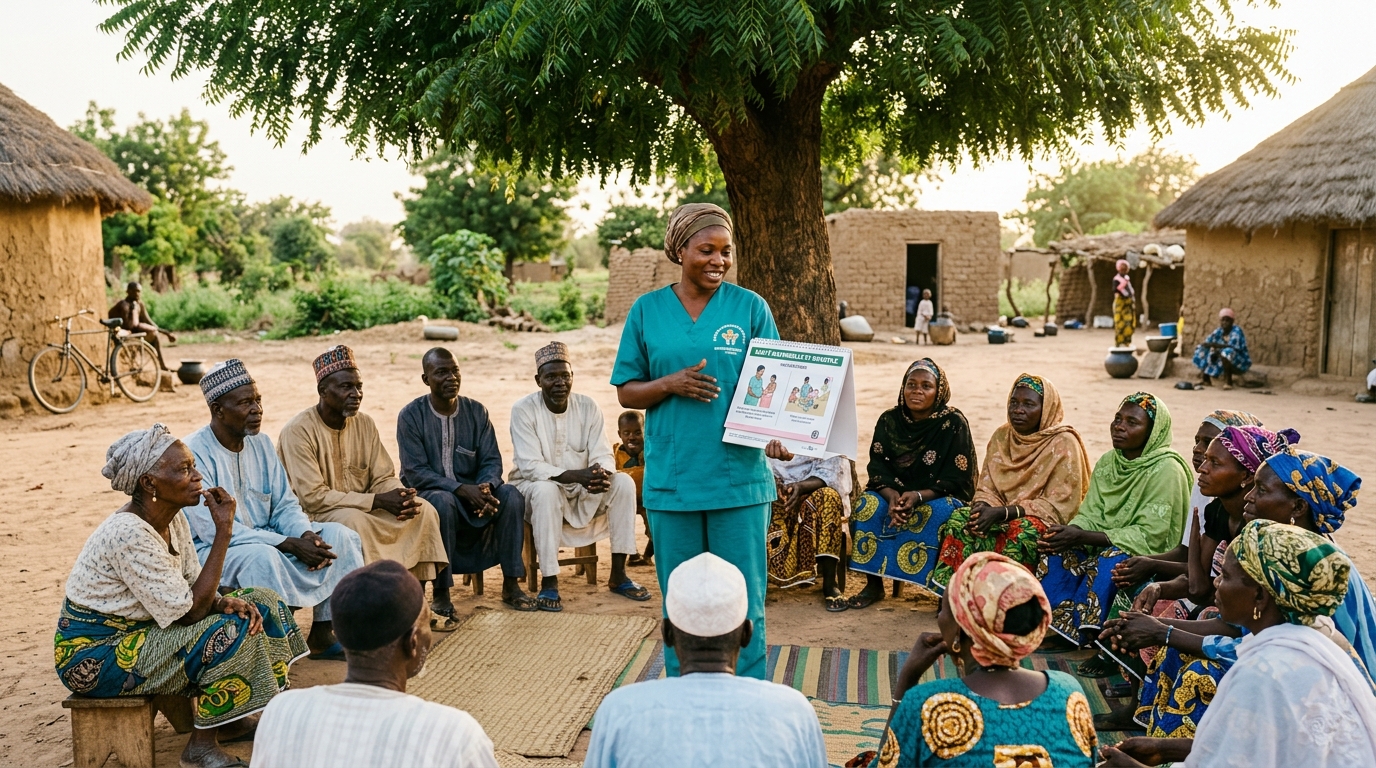
- Integrated Health Talks: Equipping health facility nurses and CHWs with standardised visual flipcharts for combined MNCH and respiratory education.
Normative Shift & Risk Mitigation
Uniting clinical care with community-level environmental and behavioral changes to protect maternal and respiratory health at home.
- Biomass Smoke Reduction: Promoting practical household behaviors to reduce indoor smoke exposure, a primary driver of COPD and pediatric ARI.
- De-stigmatizing Chronic Diseases: Reframing asthma and COPD as manageable medical conditions, encouraging active screening without fear of isolation.
- Rights-Based Health Literacy: Empowering families with clear information regarding their health rights and available primary care subsidies.