Integrated Primary Healthcare Delivery (ISD)
Strengthening clinical and community service delivery for maternal, newborn, child, and respiratory health across northern Cameroon.
Integrated Service Delivery (ISD)
Strengthening clinical and community service delivery for maternal, newborn, child, and respiratory health across northern Cameroon.
Documented Advantages of ISD over Isolated Disease Models
Evidence-backed rationale for consolidating maternal, pediatric, and chronic respiratory interventions.
Maximises Patient Contact and Equity
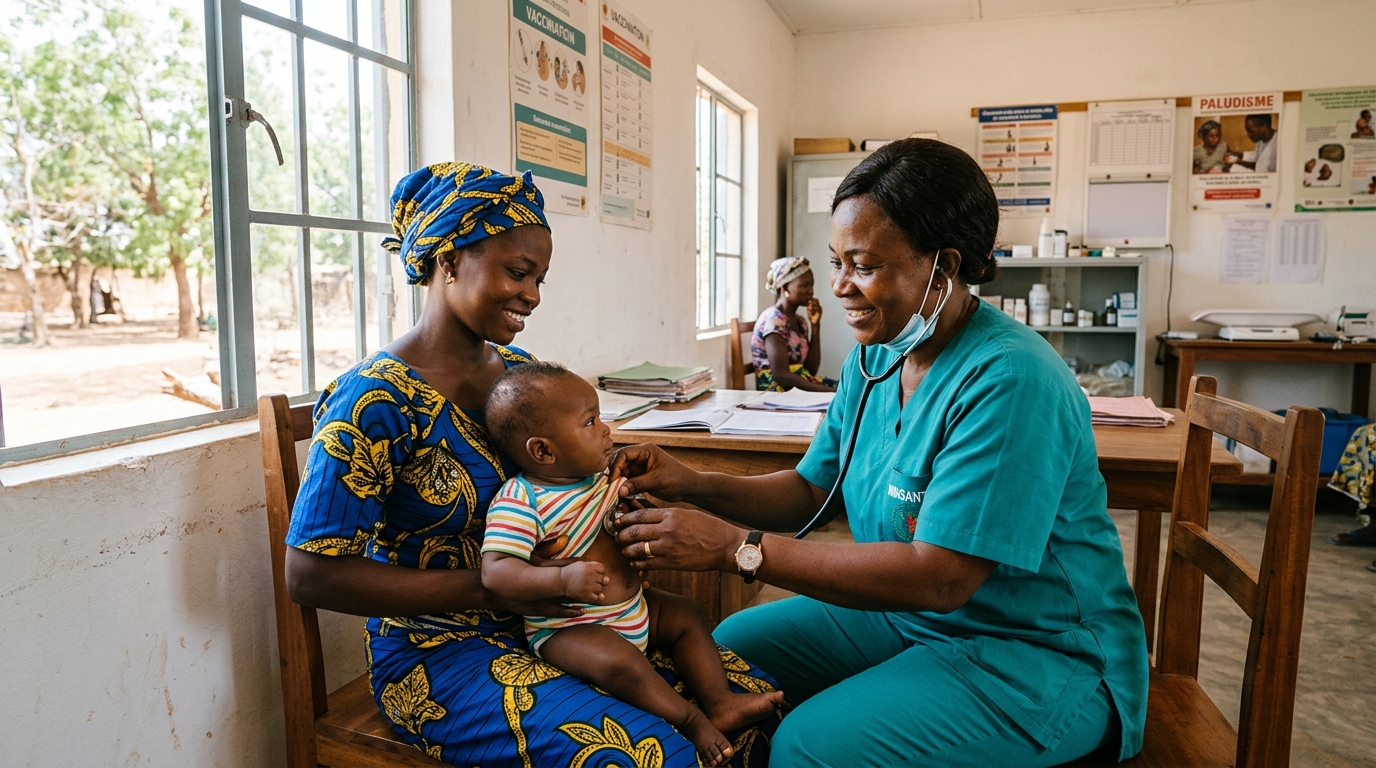
A mother bringing her child for routine immunisation or an iCCM consultation can be screened for respiratory symptoms and receive family planning counseling during the same visit, drastically reducing out-of-pocket costs and travel burdens.
Optimises Health Workforce and Resource Use
Rather than training clinical staff on separate, competing disease protocols, ISD equips healthcare workers with unified, syndromic algorithms, maximising efficiency in low-resource primary healthcare (PHC) settings.
Eliminates Diagnostic Blind Spots
Overlapping symptoms, such as a persistent pediatric cough caused by pneumonia, asthma, or tuberculosis are systematically evaluated rather than misdiagnosed through single-disease filters.
Strengthens Health System Resilience
Integrated supply chains, unified data collection (DHIS2), and multi-condition referral pathways strengthen the entire PHC platform rather than leaving behind fragile disease siloes.
Core Operation Focus Areas
Bridging community and facility care across maternal, neonatal, child, and chronic respiratory health.
Comprehensive MNCH Care and iCCM Expansion
Standardizing end-to-end clinical and community care pathways from village households to health facility delivery rooms.
Reinforce Integrated Community Case Management (iCCM)
Training and equipping Community Health Workers (CHWs) to diagnose and treat childhood pneumonia, malaria, and diarrhea at the village level.
Integrated Management of Childhood Illness (IMCI)
Standardizing facility-based triage and treatment protocols for infants and young children presenting with acute infections or nutritional deficits.
Continuity of Maternal and Newborn Care
Linking antenatal care (ANC) visits, skilled birth attendance, post-natal checks, and family planning into a seamless continuum.
Primary Respiratory Health and Chronic Lung Care
Decentralizing chronic respiratory disease detection to frontline facilities using pragmatic diagnostic tools and task-shifting.
Active Case Finding (ACF)
Systematic symptom screening for chronic respiratory conditions (Asthma, COPD, Tuberculosis) integrated into routine PHC consultations and community outreach.
Early Screening and Management
Equipping primary health centers with essential diagnostic tools (such as pulse oximetry, peak flow meters, and AI-assisted triage tools) to detect airflow obstruction early and initiate baseline management.
Core Pragmatic Activities
THRIVE operationalizes Pillar 1 across health facilities and target communities through seven core technical activities:
Integrated Multi-Disease Screening Protocols
Designing unified clinical protocols that group diseases sharing similar symptom profiles or clinical management pathways:
Coupling iCCM and IMCI algorithms with early screening for childhood illnesses.
Combining active case finding for TB, Asthma, and COPD during routine primary care consultations, using standardized symptom checklists.
Standardising Triage, Referral, and Counter-Referral Pathways
Establishing clear, bidirectional clinical pathways that connect communities, primary health centers (CSI - Centres de Santé Intégrés), and district hospitals:
Implementing standardised referral slips and digital tracking tools to ensure patients with severe respiratory distress or obstetric emergencies reach secondary care rapidly.
Establishing formal counter-referral protocols so district hospital specialists can safely transition stabilised chronic asthma/COPD patients back to PHC facilities for long-term maintenance.
Integrated Clinical Skills and Capacity Building
Conducting targeted clinical capacity initiatives under unified, practical competency frameworks:
Conducting joint task-shifting training programs for nurses and CHWs covering reproductive, maternal, pediatric, and chronic lung care under a unified curriculum.
Establishing quarterly clinical mentoring and supportive supervision visits in collaboration with District Medical Officers (DMOs).
Essential Medicine & Diagnostic Availability
Securing predictable point-of-care availability for vital frontline therapeutics and tools:
Mapping and strengthening the supply chain for essential primary care commodities including inhalers (salbutamol), spacer devices, pediatric antibiotics, oral rehydration salts (ORS), zinc, and oxytocin.
Distributing low-cost, durable diagnostic tools (pulse oximeters, peak flow meters, pediatric stethoscopes) tailored for low-resource PHC environments.
Point-of-Care Health Data Harmonisation
Eliminating reporting silos through seamless, frontline digital recording tools:
Streamlining clinical registers and digital tools (e.g., ODK, KoboToolbox) so health workers capture integrated patient records during a single encounter without redundant documentation.
Aligning primary care data indicators directly with the national Health Management Information System (DHIS2).
Facility-Community Linkage & Household Follow-up
Bridging clinical triage with proactive community engagement and home care:
Mobilising Community Health Workers to conduct structured home visits for high-risk maternal clients, postpartum mothers, and patients managing chronic respiratory conditions.
Tracking treatment adherence and appointment attendance at the community level to minimise loss-to-follow-up.
Quality Improvement (QI) Learning Cycles
Instilling continuous, localized performance refinement at health facility levels:
Establishing facility-level QI teams that review monthly service delivery data to identify bottlenecks in maternal or respiratory care.
Testing and iteratively validating localized clinical solutions using Plan-Do-Study-Act (PDSA) quality improvement cycles.
Explore Connected Programs & Subsequent Pillars
See how Integrated Primary Healthcare Delivery connects seamlessly with Health Systems Strengthening, Implementation Research, and Community SBC.