Pillar 2: Health Systems Strengthening (HSS)
Building healthcare worker capacity, optimizing digital health data systems, and expanding primary respiratory care across the Adamawa region and northern Cameroon.
The Regional Health Context: Baseline Challenges in Adamawa
In the Adamawa region of Cameroon, structural health system bottlenecks severely constrain the delivery of quality Primary Health Care (PHC), particularly for Maternal, Newborn, and Child Health (MNCH) and chronic respiratory conditions:
Severe Health Workforce Deficit
The health workforce density in Adamawa stands at 3.1 per 10,000 population, critically below the WHO minimum benchmark of 23 per 10,000, leaving frontline nurses and community workers carrying immense clinical workloads.
Insufficient Health Facility Coverage
Facility density is 1.4 per 10,000 population, below the recommended threshold of 2.2 per 10,000, making community-based care and proactive outreach indispensable.
Fragmented Data Systems
DHIS2 Community GapData completeness in the national Health Management Information System (DHIS2) remains sub-optimal. While community reporting began under the National Strategic Plan (2021–2025), community data remains underutilized for district planning.
Capacity and Digital Tool Gaps
CHW & Nurse SupportFrontline PHC personnel and multipurpose Community Health Workers (CHWs / Agents de Santé Communautaires Multipurpose) lack sufficient structured clinical training, supportive supervision, and digital decision-support tools.
Respiratory Care Desert
Primary Care VoidSpirometers and peak flow meters are virtually absent at the primary care level, public active screening for asthma and COPD is non-existent, and standard inhaled medicines face major supply barriers.
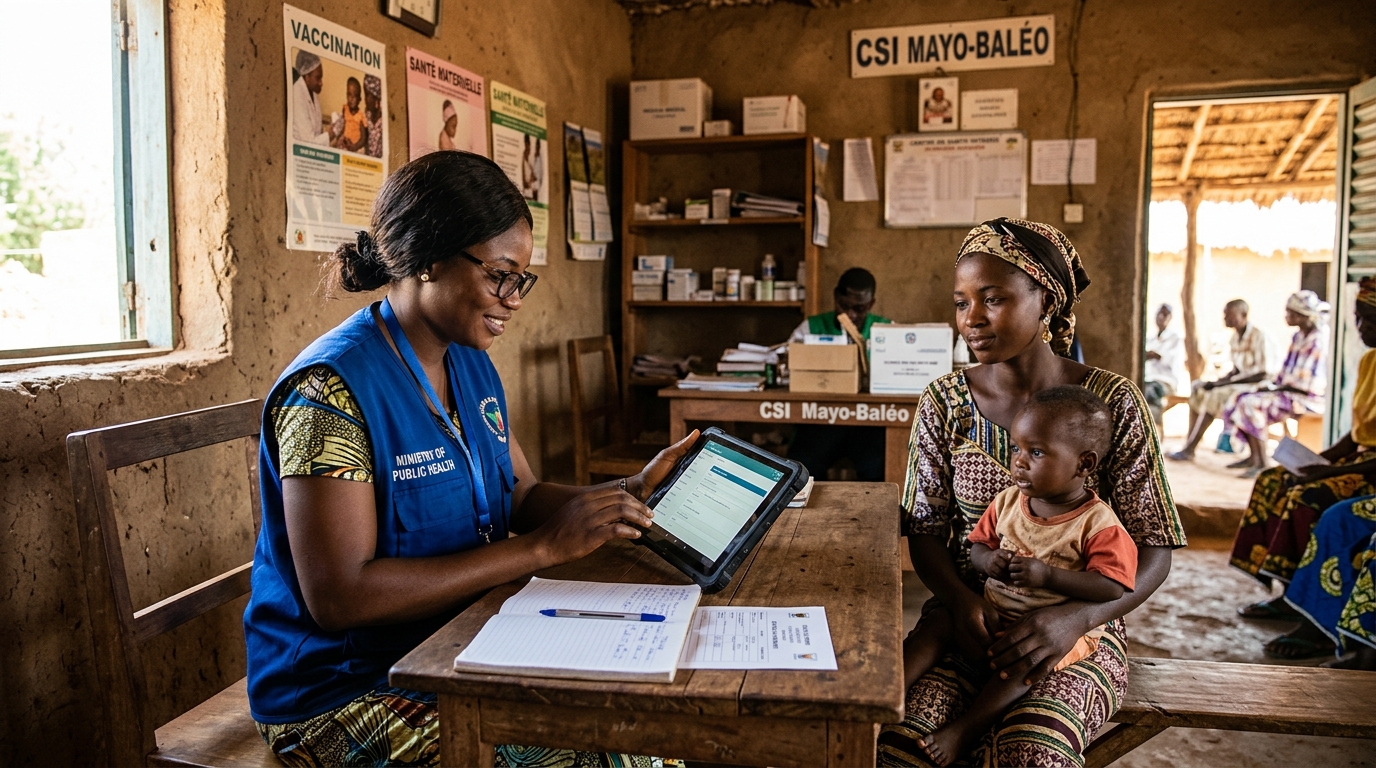
How Digital Outreach Counters the Acute Health Workforce & Facility Shortage
In Adamawa, an extreme workforce shortage (3.1 per 10,000) and sparse health facility coverage (1.4 per 10,000) mean rural households face dangerous delays in accessing clinical care. Static clinics alone cannot cover dispersed communities across vast rural catchments.
Our Core Approach: Multi-Stakeholder Governance
THRIVE addresses these challenges by embedding every activity directly within government frameworks and multi-sectoral partnerships:
MINISTRY OF PUBLIC HEALTH AND REGIONAL DELEGATION
(Regional Delegation of Public Health - Adamawa)
Institutional grounding via formal 3-year bilateral MoU, regulatory compliance, regional policy alignment, and health territory authorization.
District Medical Officers (DMOs)
Operational oversight, joint monthly supportive supervision cascade, and quarterly district health data review meetings.
Regional Drug Fund (FRPS-Ad)
Supply chain alignment, essential medicine stockout monitoring, and subsidized procurement of frontline respiratory/pediatric commodities.
Professional Medical Societies
Cameroon Societies of Pediatricians, Pulmonologists, and Gynaecologists driving clinical curricula, task-shifting protocols, and mentoring.
PRIMARY HEALTH CENTERS (CSI) & MULTIPURPOSE COMMUNITY HEALTH WORKERS (CHWs)
Integrated facility-based clinical consultations, protocolized IMCI/triage, digital point-of-care data entry, home-based active case finding, and bidirectional community referral networks.
Core Focus Areas and Pragmatic HSS Activities
Transforming baseline bottlenecks into resilient, sustainable public health infrastructure.
Workforce Capacity Building and Task-Sharing
To counter acute staff shortages, THRIVE implements structured task-sharing frameworks that empower non-specialist nurses, clinical officers, and multipurpose CHWs to safely manage routine care.
Partnering with the Cameroon Society of Pediatricians and the Cameroon Society of Pulmonologists to train non-specialist PHC clinicians in standardised triage, emergency stabilisation, IMCI, and primary respiratory management.
Co-designing monthly, integrated supportive supervision visits alongside District Medical Officers (DMOs) to replace static classroom training with on-the-job clinical coaching.
Standardising training modules for community health workers to conduct home-based active case finding for pediatric pneumonia, malnutrition, asthma, and COPD symptoms.
Digital Health & DHIS2 Community Data Integration
To bridge data completeness gaps and empower district leaders with real-time decision-making capabilities:
Deploying simplified, mobile digital decision-support tools (e.g., ODK / KoboToolbox / CommCare) to guide CHWs and PHC nurses step-by-step through clinical algorithms for MNCH and lung health.
Strengthening the digital bridge between community health worker registers and the national DHIS2 platform in collaboration with the Adamawa Regional Delegation of Public Health.
Establishing quarterly District Data Review Meetings with Health District Teams to analyse community-level trends, identify coverage gaps, and allocate local resources based on evidence.
Non-Specialist Respiratory Care and Diagnostic Deployment
THRIVE is building a sustainable primary care foundation for asthma, COPD, and chronic respiratory diseases where none currently exists:
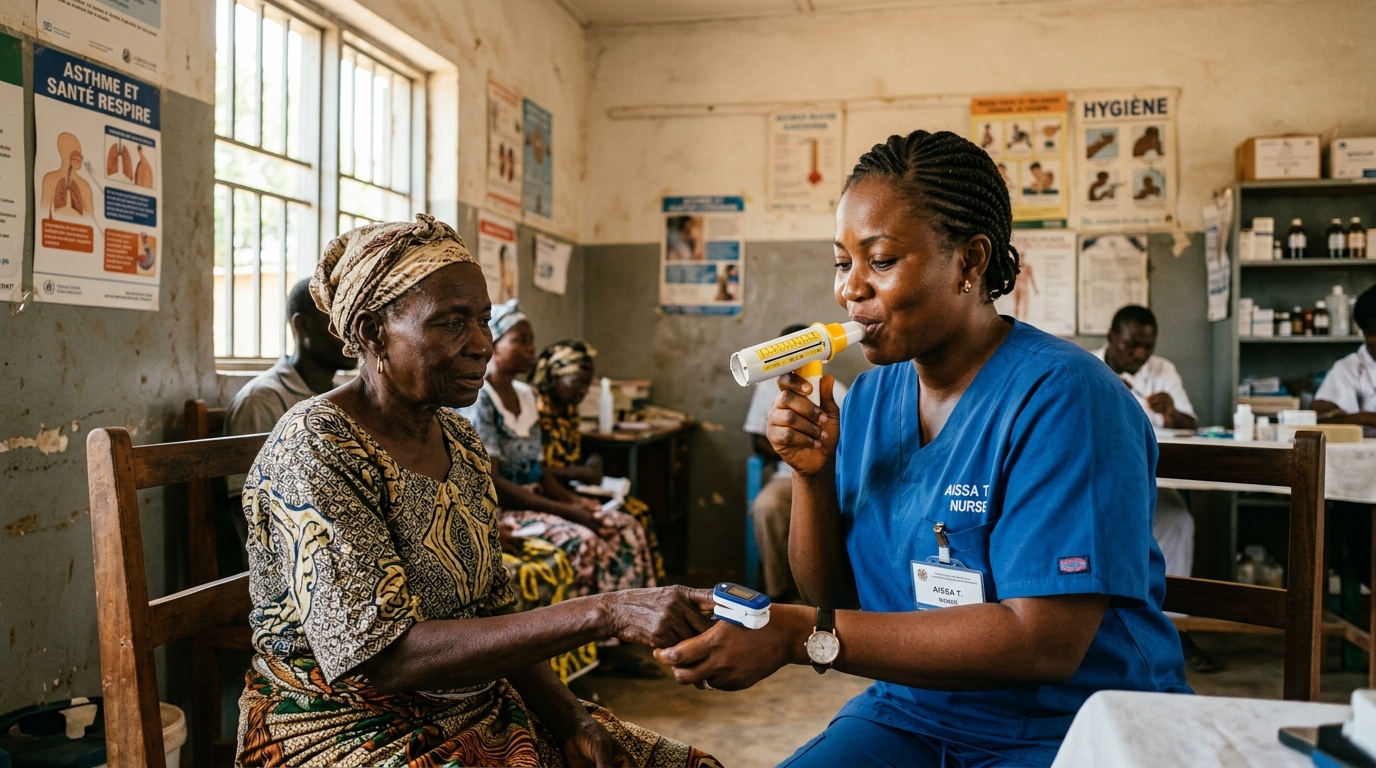
Equipping primary health centers (Centres de Santé Intégrés) with durable, low-maintenance diagnostic kits including peak flow meters, pulse oximeters, and pediatric stethoscopes when possible.
Conducting practical training workshops led by the Cameroon Society of Pulmonologists to certify PHC nurses in performing basic peak flow measurements and interpreting simple spirometry graphs.
Launching community-based active symptom screening drives targeting high-risk individuals (e.g., indoor biomass smoke exposure, chronic coughers) to detect undiagnosed asthma and COPD early.
Supply Chain and Essential Medicines Advocacy
To ensure that screening and diagnosis lead to reliable, uninterrupted treatment:
FRPS-Ad Alignment & Essential Medicines Advocacy
Diagnostics alone cannot save lives without reliable commodity pipelines. THRIVE works directly with the Regional Drug Fund (FRPS-Ad) and national policy committees to overcome frequent stockouts of inhaled corticosteroids, short-acting bronchodilators, and pediatric antibiotics.
Partnering with the Regional Fund for Health Promotion / Regional Drug Supply (FRPS-Ad) to streamline the distribution of essential pediatric supplies, oral rehydration salts, zinc, and basic respiratory commodities.
Working alongside academic bodies, professional medical societies, and public health authorities to advocate for the formal inclusion and subsidized availability of core inhalers (such as inhaled corticosteroids and salbutamol) on national primary healthcare essential medicine lists.
Explore Connected Programs & Next Pillars
Discover how Health Systems Strengthening interfaces with Integrated Service Delivery, Implementation Research, and Community SBC.